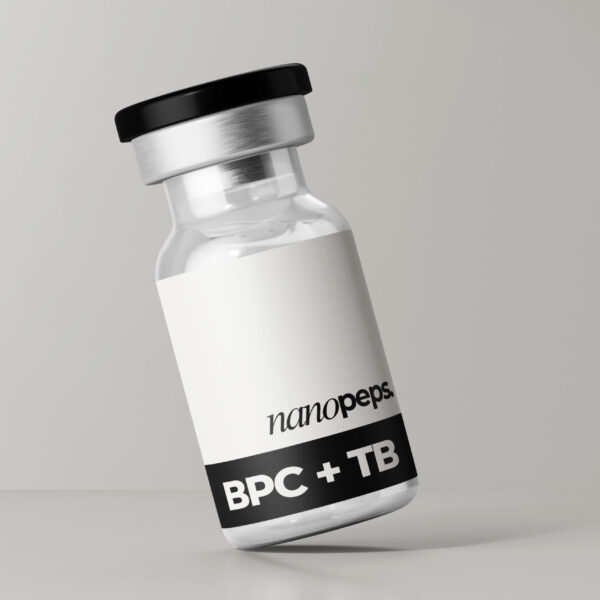


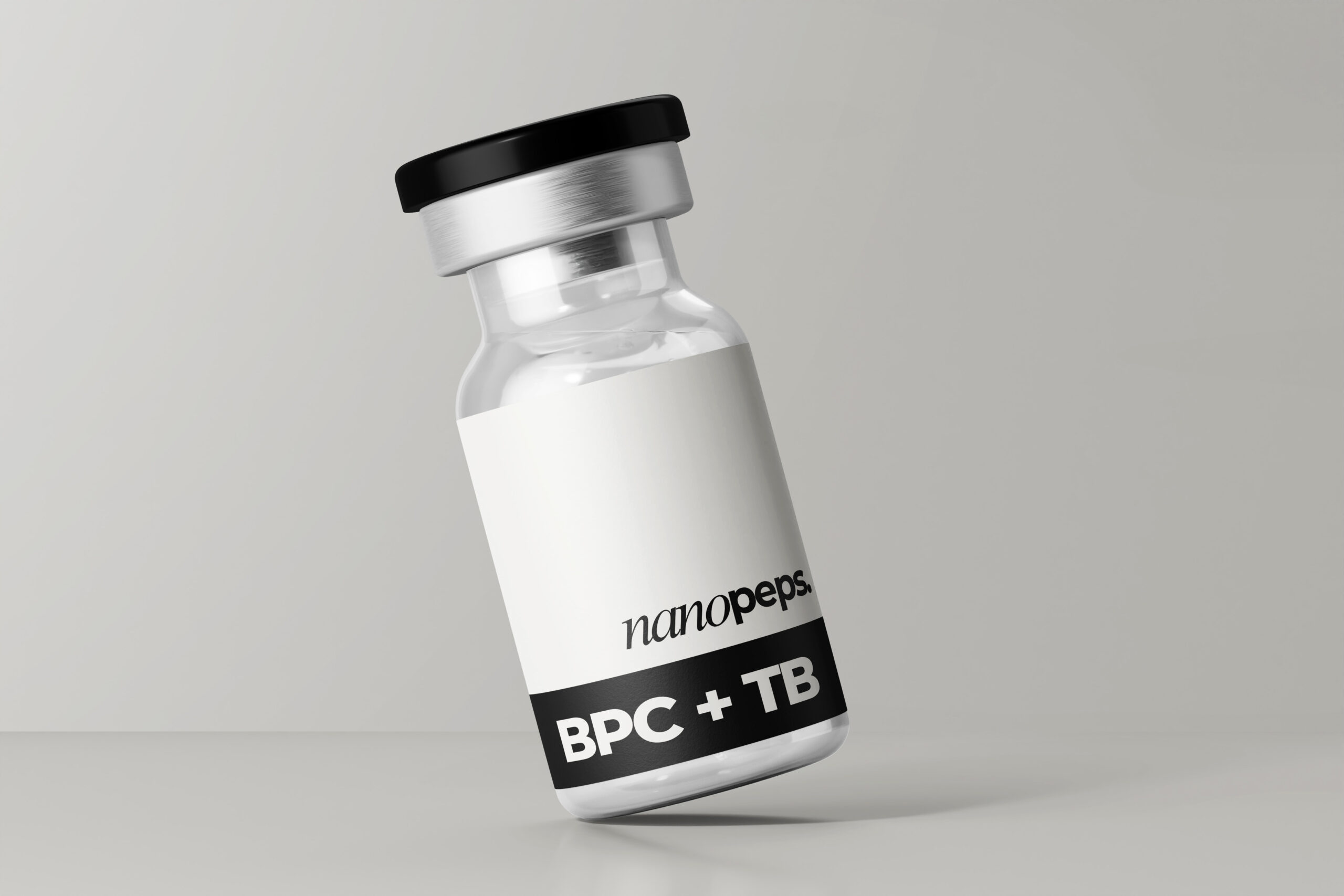
BPC-157+TB-500



$45.00 only $36.00/vial



Shipping & Delivery
Order Placed
Today
Processing & Dispatch
1–2 business days
Estimated Delivery
1-2 business days shipping
Get it by
Always quality-tested, verified with third-party COAs
Identity Test
PassedVerifies the peptide's sequence and structure so the correct compound is present in each vial.
Purity Test
PassedMeasures purity and concentration to confirm ≥99% purity on qualifying batches.
Sterility Test
PassedScreens for bacteria, fungi, and other microorganisms to verify sterile handling.
Endotoxicity
PassedTests for lipopolysaccharides (LPS) to ensure endotoxin levels stay within research limits.
BPC-157 and TB-500 (Thymosin Beta-4) are peptides commonly studied for their potential in promoting tissue repair and healing. Both have distinct yet complementary mechanisms that, when combined, may offer synergistic benefits. BPC-157, a stable gastric pentadecapeptide, is derived from a protective protein found in the stomach lining. It has been shown in preclinical studies to accelerate healing of muscles, tendons, and ligaments by promoting angiogenesis (the formation of new blood vessels) and regulating the production of growth factors. Similarly, TB-500, a fragment of the naturally occurring Thymosin Beta-4 protein, plays a key role in cell migration, tissue regeneration, and reducing inflammation.
The potential synergy between these peptides arises from their overlapping yet distinct pathways in tissue repair. While BPC-157 excels at improving blood flow and reducing inflammation, TB-500 focuses on facilitating cellular migration to the injury site and supporting the repair process at the cellular level. Together, they may accelerate healing by addressing multiple aspects of tissue recovery, particularly in sports injuries or chronic conditions where regeneration is compromised. Early animal studies suggest this combination may lead to faster recovery times and improved structural integrity of repaired tissues.
It is crucial to note that while promising, much of the research on BPC-157 and TB-500 remains preclinical.

Description
Potential BPC-157 and TB-500 Synergy in Wound Repair
Cell Migration
Successful wound healing depends on fibroblasts, which regulate extracellular matrix production, as well as cells of the immune system. For these cells to do their jobs, they need to move to the location of injury. This movement, called migration, is heavily dependent the protein actin. Both BPC-157 and TB-500 are important in actin regulation. BPC-157 works at the level of the gene to increase actin production[1]. TB-500, an actin binding protein, helps to sequester actin in areas where it is most useful for building filaments from actin to allow for cell movement[2]. Together, BPC-157 and TB-500 work synergistically to increase the quantity and function of actin and thus increase the rate at which fibroblasts and cells of the immune system migrate to areas of injury.
The Big Picture Involves Growth Hormone
Both TB-500 and BPC-157 interact with growth hormone in the healing process. BPC-157 increases the expression of growth hormone receptors on fibroblasts, boosting the longevity of these cells and thus their ability to promote soft tissue regeneration[3]. With TB-500 on board, the extra growth hormone receptors will not go to waste because the fibroblasts will have adequate stores of actin to make use of their elongated lifespans. Combining TB5-00, BPC-157, collagen, and a growth hormone secretagogue is a surefire way to increase rates of wound healing and may one day replace standard treatment regimens as the gold standard.
About The Author
The above literature was researched, edited and organized by Dr. E. Logan, M.D. Dr. E. Logan holds a doctorate degree from Case Western Reserve University School of Medicine and a B.S. in molecular biology.
Scientific Journal Author
Allan L. Goldstein, MD, Allan L. Goldstein is professor and Catharine B. & William McCormick Chair of the department of Biochemistry and Molecular Biology at The George Washington University School of Medicine and Health Sciences, where he has served since 1978. Thymosins were discovered in the mid 1960’s, when Allan Goldstein from the Laboratory of Abraham White at the Albert Einstein College of Medicine in New York studied the role of the thymus in development of the vertebrate immune system. He is a world-renowned authority on the thymus gland and the workings of the immune system, and co-discoverer of the thymosins. Dr. Goldstein is the author of over 400 scientific articles in professional journals, the inventor on more than 15 U.S. Patents, and the editor of several books in the fields of biochemistry, biomedicine, immunology and neuro-science. He is on the editorial boards of numerous scientific and medical journals and has been a consultant to many re-search organizations in industry and government; co-founder of The Institute for Advanced Studies in Aging and Geriatric Medicine, a non-profit research and educational institute; a member of the Board of Trustees of the Albert Sabin Vaccine Institute; and serves as the Chairman of the Board of RegeneRx Biopharmaceuticals. Dr. Goldstein received his B.S. from Wagner College in 1959 and his M.S. and Ph.D. from Rutgers University in 1964. He served as a faculty member of the Albert Einstein College of Medicine from 1964 to 1972, and moved to the University of Texas Medical Branch in Galveston in 1972 as professor and director of the division of Biochemistry.
Allan L. Goldstein, MD is being referenced as one of the leading scientists involved in the research and development of TB-500 and other Thymosins. In no way is this doctor/scientist endorsing or advocating the purchase, sale, or use of this product for any reason. There is no affiliation or relationship, implied or otherwise, between Peptide Sciences and this doctor. The purpose of citing the doctor is to acknowledge, recognize, and credit the exhaustive research and development efforts conducted by the scientists studying this peptide. Dr. Goldstein is listed in [5] under the referenced citations.
Resources
- C.-H. Chang, W.-C. Tsai, M.-S. Lin, Y.-H. Hsu, and J.-H. S. Pang, “The promoting effect of pentadecapeptide BPC 157 on tendon healing involves tendon outgrowth, cell survival, and cell migration,” J. Appl. Physiol., vol. 110, no. 3, pp. 774–780, Oct. [Physiology.org]
- J. Kim and Y. Jung, “Potential Role of Thymosin Beta 4 in Liver Fibrosis,” Int. J. Mol. Sci., vol. 16, no. 5, pp. 10624–10635, May 2015. [NCBI]
- C.-H. Chang, W.-C. Tsai, Y.-H. Hsu, and J.-H. S. Pang, “Pentadecapeptide BPC 157 enhances the growth hormone receptor expression in tendon fibroblasts,” Mol. Basel Switz., vol. 19, no. 11, pp. 19066–19077, Nov. 2014. [NCBI]
- Song, Ran & Choi, Hyun & Yang, Hyung-In & Yoo, Myung & Park, Yong-Beom & Kim, Kyoung. (2012). Association between serum thymosin β4 levels of rheumatoid arthritis patients and disease activity and response to therapy. Clinical rheumatology. 31. 1253-8. 10.1007/s10067-012-2011-7. [Research Gate]
- Philp, D., et al. “Thymosin β4 Promotes Angiogenesis, Wound Healing, and Hair Follicle Development.” Mechanisms of Ageing and Development, vol. 125, no. 2, Feb. 2004, pp. 113–115, 10.1016/j.mad.2003.11.005. [PubMed]
ALL ARTICLES AND PRODUCT INFORMATION PROVIDED ON THIS WEBSITE ARE FOR INFORMATIONAL AND EDUCATIONAL PURPOSES ONLY.
The products offered on this website are furnished for in-vitro studies only. In-vitro studies (Latin: in glass) are performed outside of the body. These products are not medicines or drugs and have not been approved by the FDA to prevent, treat or cure any medical condition, ailment or disease. Bodily introduction of any kind into humans or animals is strictly forbidden by law.
Storage Instructions:
Our products are manufactured using lyophilization (freeze drying), which keeps them stable for shipping for up to 3–4 months at room temperature.
Once the peptides are reconstituted with bacteriostatic water, they must be stored in the refrigerator and will remain stable for up to 30 days.
Lyophilization is a dehydration process in which peptides are frozen and exposed to low pressure so that water goes directly from solid to gas (sublimation), leaving a stable, white powder. This puffy white powder can be stored at room temperature until you are ready to mix it with bacteriostatic water.
After you receive your peptides, keep them cold, dry, and away from light whenever possible. For use over the next several days to a few months, refrigeration below 4 °C (39 °F) is generally sufficient, and lyophilized peptides can tolerate room temperature for several weeks if needed.
For long‑term storage (several months to years), store peptides in a freezer at about −80 °C (−112 °F). Freezing is the preferred method for preserving peptide stability over extended periods.
Guaranteed Quality or Your Money Back
We’re committed to giving you complete confidence in our products. If you’d like third-party verification, you’re welcome to use any trusted, accredited lab of your choice to perform independent testing under our company name—and we’ll cover 100% of the testing cost.
Our formulations consistently deliver the exact peptide strength, purity, and specifications we promise. Our production standards are rigorous, and we’ve never had a case of underfilled or substandard product—our quality is unwavering.
Should your test results reveal anything that falls short of expectations, we’ll issue a full refund of both your order and all testing fees—no questions asked. We proudly stand behind our products with a guarantee of precise dosing and uncompromised quality.