







Description
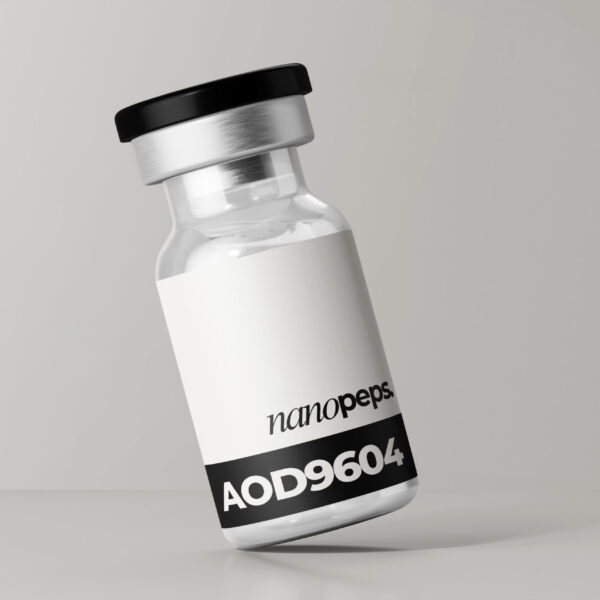
What is AOD9604?
AOD9604 is a modified version of fragment 176-191, which is itself a smaller, modified piece of human growth hormone (HGH). AOD9604 was originally developed as an anti-obesity drug due to its lipolytic (fat burning) properties. This peptide is valued for the fact that it has limited effects beyond fat burning. It does not appear to affect IGF-1 levels or insulin levels and therefore is not a risk factor in promoting glucose intolerance or diabetes[1]. There is also no evidence that the body forms antibodies against AOD9604 as it is similar enough in structure to HGH to avoid stimulating an immune system response[2].
AOD9604 Structure
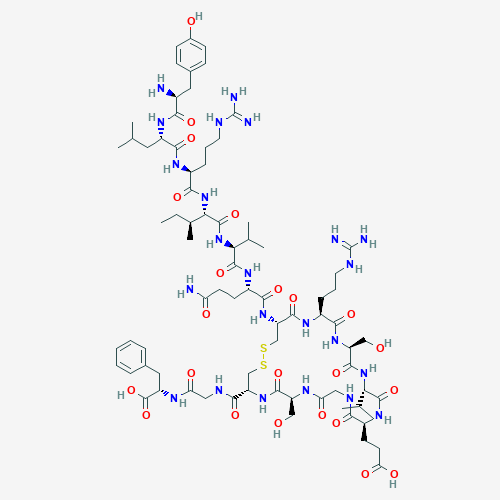
Source: PubChem
Sequence: Tyr-Leu-Arg-Ile-Val-Gln-Cys-Arg-Ser-Val-Glu-Gly-Ser-Cys-Gly-Phe Disulfide bridge Cys7-Cys15
Molecular Formula: C78H123N23O23S2
Molecular Weight: 1815.12 g/mol
PubChem CID: 16131447
CAS Number: 386264-39-7
AOD9604 Research
1. AOD9604 and Obesity
AOD9604 was originally developed as an analogue of HGH with the express purpose of fighting fat. Phase 2b clinical trials were completed in Australia testing the drug in 300 obese individuals. The results of once daily administration of the peptide for 12 weeks showed that the drug tripled weight loss when compared to placebo and that the rate of weight loss remained steady during the trial period[3], [4]. This latter fact indicates that a resistance to the peptide is unlikely to arise and that longer-term treatment would result in even greater weight loss.
Research in mice that are genetically prone to obesity indicates that AOD9604 most likely does not work only by affecting the beta-3-adrenergic receptors found on white fat. It was originally speculated that the peptide bound in these receptors and increased the rate of metabolism in fat cells, shifting them from a storage mode to a usage mode. It turns out that even in mice that lack these receptors, fat loss takes place when AOD9604 is administered[5]. Though the beta-3-adrenergic receptor likely plays a role in fat loss secondary to AOD9604, at least one other mechanism must be in play as well. There is some thought that AOD9604 may indirectly activate apoptosis in white fat cells.

Body weight change in obese mice over 14-day treatment period with AOD9604 (squares), HGH (triangles), and placebo (circles).
Source: Oxford Academic
2. Joint Pain and Function
Research in rats indicates that injections of AOD9604 directly into arthritic joints can work in synergy with existing therapies to improve pain, reduce disability, and improve quality of life[6]. Changes in both gross clinical exam and microscopic structure of cartilage in the affected joints indicates that AOD9604 is effective in treating the root cause of osteoarthritis and may work as both a treatment and preventative. Though AOD9604 is effective in reducing joint dysfunction on its own, it works better in combination with other therapies. It isn’t clear how the synergy arises, but additional research using the peptide may reveal novel pathways for improving cartilage growth, a notoriously challenging clinical problem.
3. AOD9604 and Heart Disease
Though fat reduction and weight loss directly reduce the risk of heart disease, there is evidence to suggest that AOD9604 has beneficial effects on the heart beyond its ability to reduce fat burden. It is thought that the peptide may directly affect metabolism in such a way so as to reduce complications separate from its effects on obesity. This is not unheard of, as drugs like pioglitazone and acipimox both reduce metabolic complications without treating obesity at all. It is thought that the secondary pathway by which AOD9604 causes fat loss, the pathway that is independent of beta-3-adrenergic receptor activation, may play a role in improving metabolic metrics even while it boosts fat loss[7].
AOD9604 exhibits minimal side effects, high oral and excellent subcutaneous bioavailability in mice. Per kg dosage in mice does not scale to humans. AOD9604 for sale at Peptide Sciences is limited to educational and scientific research only, not for human consumption. Only buy AOD9604 if you are a licensed researcher.
Article Autho
The above literature was researched, edited and organized by Dr. Logan, M.D. Dr. Logan holds a doctorate degree from Case Western Reserve University School of Medicine and a B.S. in molecular biology.
Scientific Journal Author
Stier Heike studied biology and holds a PhD in Neurobiology (NMIReutlingen/ University of Hohenheim) and a Master in Bioinformatics (University of Applied Sciences-TFH-Berlin). She worked as a Post-Doc in several national and international Labs in Developmental Neurobiology (NMI-Reutlingen, School of Medicine – University of Utah) and in Bioinformatics (Institute of Bioinformatics – Charité, Berlin). Dr. Heike pioneered a study on the safety and tolerability of the Hexadecapeptide AOD9604 in Humans. In 2007, she joined A&R where she was responsible for the field of regulatory affairs of herbal medicinal products, with a broad knowledge of the adjacent product categories medical device and supplements. Dr. Heike Stier currently works in the field of regulatory affairs for herbal medicinal products at analyze & realize GmbH.
Stier Heike is being referenced as one of the leading scientists involved in the research and development of AOD9604. In no way is this doctor/scientist endorsing or advocating the purchase, sale, or use of this product for any reason. There is no affiliation or relationship, implied or otherwise, between Peptide Sciences and this doctor. The purpose of citing the doctor is to acknowledge, recognize, and credit the exhaustive research and development efforts conducted by the scientists studying this peptide. Dr. Heike is listed in [8] under the referenced citations.
Referenced Citations
- F. M. Ng, J. Sun, L. Sharma, R. Libinaka, W. J. Jiang, and R. Gianello, “Metabolic studies of a synthetic lipolytic domain (AOD9604) of human growth hormone,” Horm. Res., vol. 53, no. 6, pp. 274–278, 2000.
- H. Stier, E. Vos, and D. Kenley, “Safety and Tolerability of the Hexadecapeptide AOD9604 in Humans,” J. Endocrinol. Metab., vol. 3, no. 1–2, pp. 7-15–15, Apr. 2013. [Journal of Endocrinology & Metabolism]
- “Obesity drug codenamed AOD9604 highly successful in trials,” News-Medical.net, 16-Dec-2004. [Online]. Available: [Accessed: 24-May-2019].
- R. Zieba, “[Obesity: a review of currently used antiobesity drugs and new compounds in clinical development],” Postepy Hig. Med. Doswiadczalnej Online, vol. 61, pp. 612–626, Oct. 2007.
- M. Heffernan et al., “The Effects of Human GH and Its Lipolytic Fragment (AOD9604) on Lipid Metabolism Following Chronic Treatment in Obese Mice andβ 3-AR Knock-Out Mice,” Endocrinology, vol. 142, no. 12, pp. 5182–5189, Dec. 2001.
- D. R. Kwon and G. Y. Park, “Effect of Intra-articular Injection of AOD9604 with or without Hyaluronic Acid in Rabbit Osteoarthritis Model,” Ann. Clin. Lab. Sci., vol. 45, no. 4, pp. 426–432, Jul. 2015.
- M. D. Jensen, “Potential role of new therapies in modifying cardiovascular risk in overweight patients with metabolic risk factors,” Obes. Silver Spring Md, vol. 14 Suppl 3, pp. 143S-149S, Jun. 2006.
- STIER, H., VOS, E., KENLEY, D.. Safety and Tolerability of the Hexadecapeptide AOD9604 in Humans. Journal of Endocrinology and Metabolism, North America, 3, apr. 2013.
ALL ARTICLES AND PRODUCT INFORMATION PROVIDED ON THIS WEBSITE ARE FOR INFORMATONAL AND EDUCATIONAL PURPOSES ONLY.
The products offered on this website are furnished for in-vitro studies only. In-vitro studies (Latin: in glass) are performed outside of the body. These products are not medicines or drugs and have not been approved by the FDA to prevent, treat or cure any medical condition, ailment or disease. Bodily introduction of any kind into humans or animals is strictly forbidden by law.